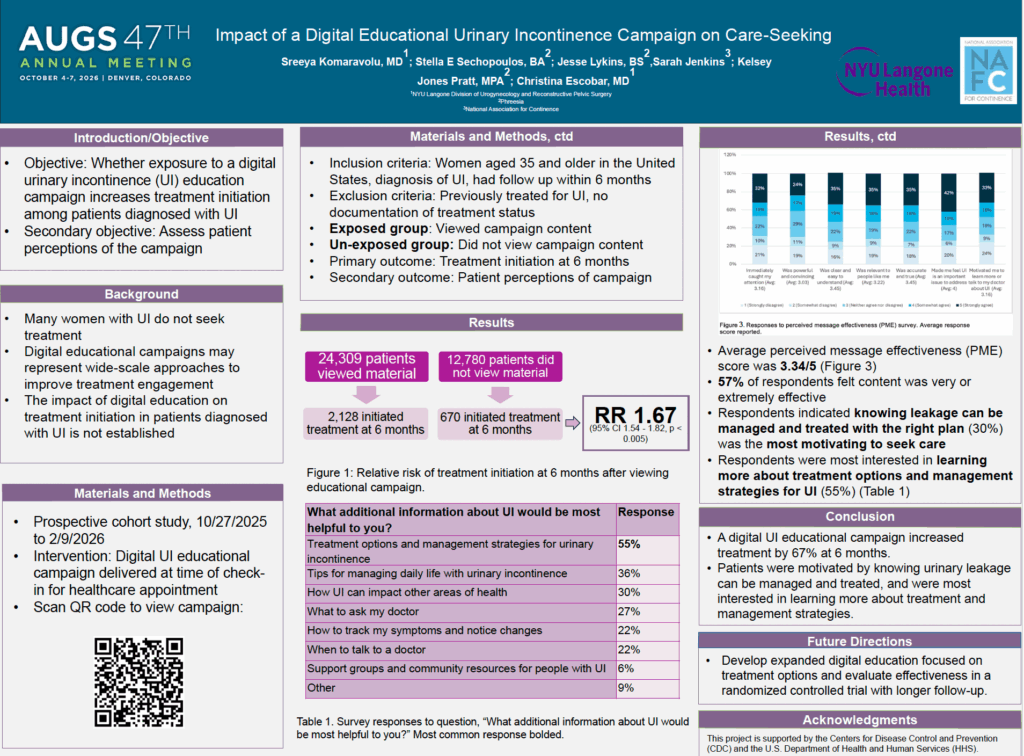
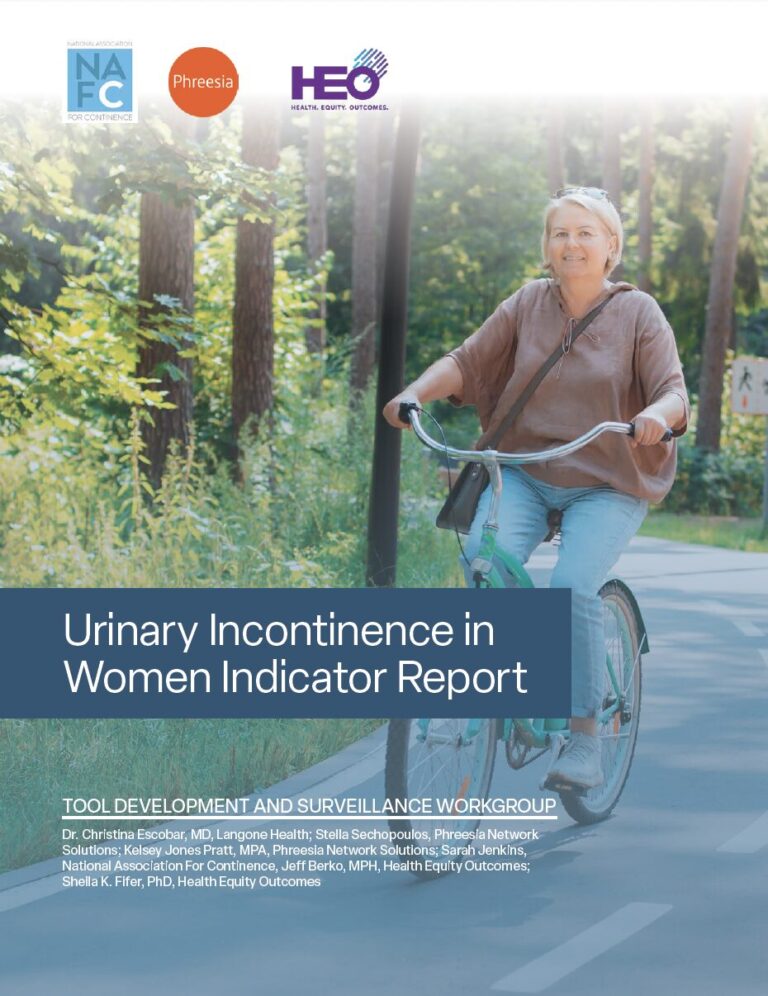
NAFC’s We Count Campaign – Professional Resources
"We Count" - A Call To Action For Healthcare Professionals
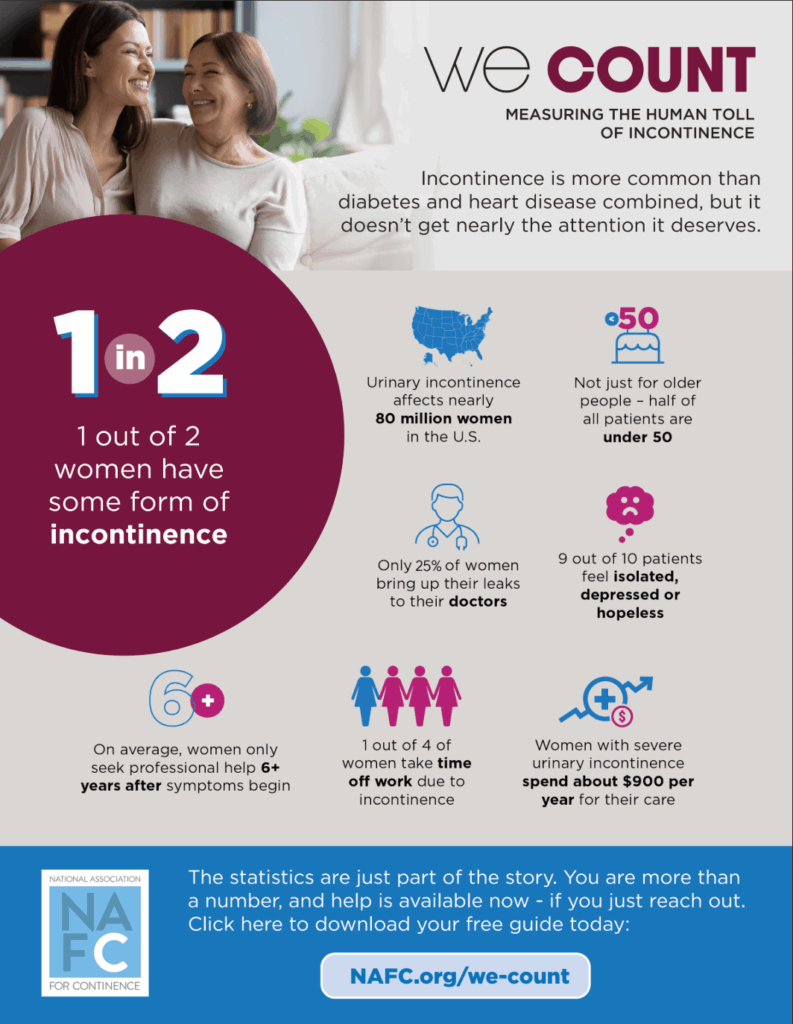
Urinary incontinence affects millions of women, yet too often it goes undiagnosed and untreated. Many women hesitate to bring it up, waiting years before discussing symptoms with a provider. As a trusted clinician, you play a critical role in changing that story.
Why It Matters
- High prevalence, low reporting: Nearly 1 in 2 women will experience incontinence, but stigma and embarrassment keep many silent.
- Quality of life impact: Left unaddressed, bladder leaks can lead to social isolation, depression, and physical health risks.
- Your influence matters: When providers initiate the conversation, patients are more likely to seek help and explore effective treatment options.
How NAFC Can Help your Practice
NAFC has developed tools designed specifically for healthcare professionals to support patient conversations and care:
- National Indicator Report (New!):
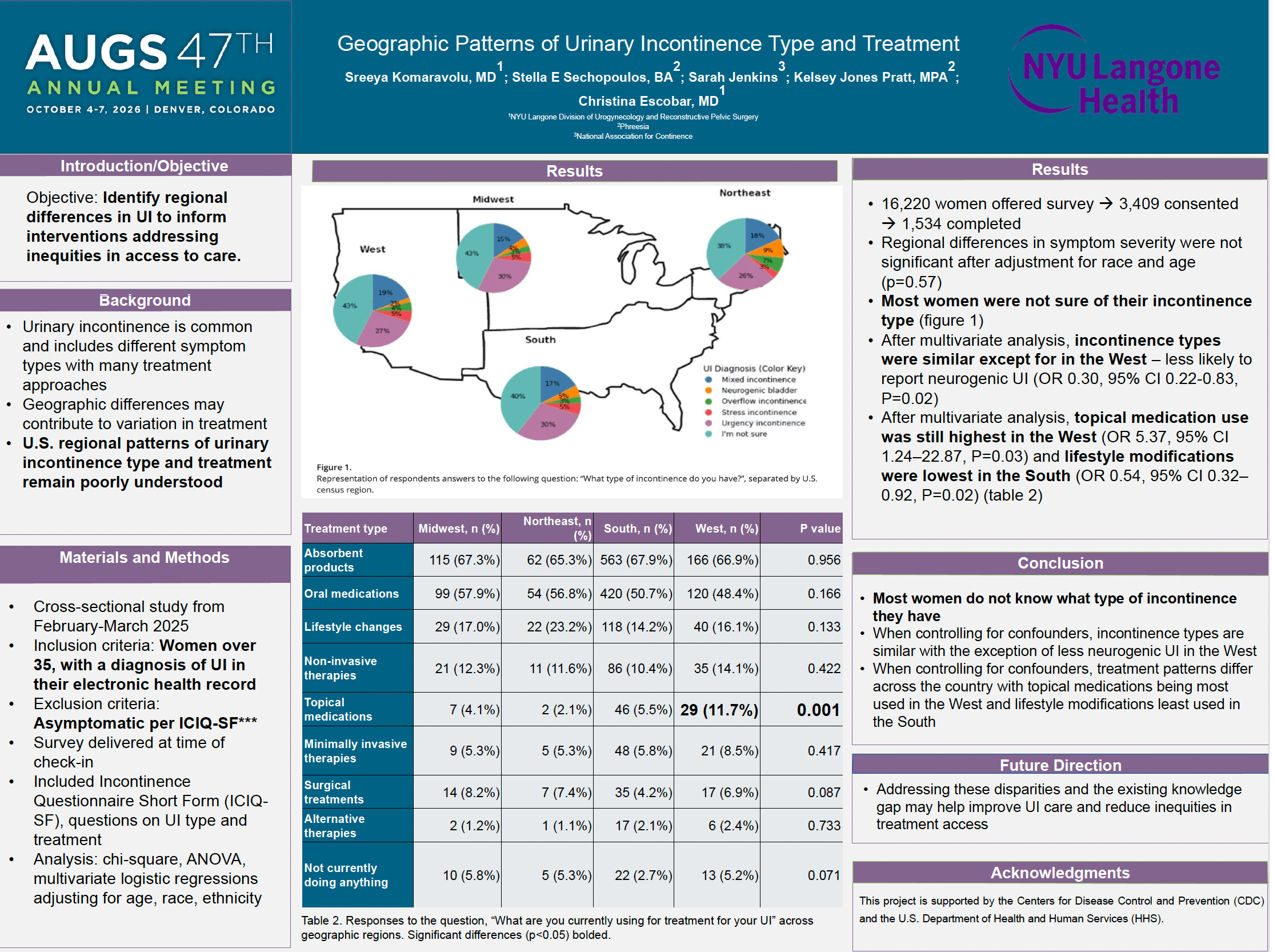
Our national indicator report was developed for Public Health Professionals, Community Health Centers, and Healthcare Providers, and provides a comprehensive overview of the different types of incontinence, causes and symptoms, ways to diagnose incontinence, and the many treatment options that exist for each type. Watch our video walkthrough of the report below, then download the free report today!
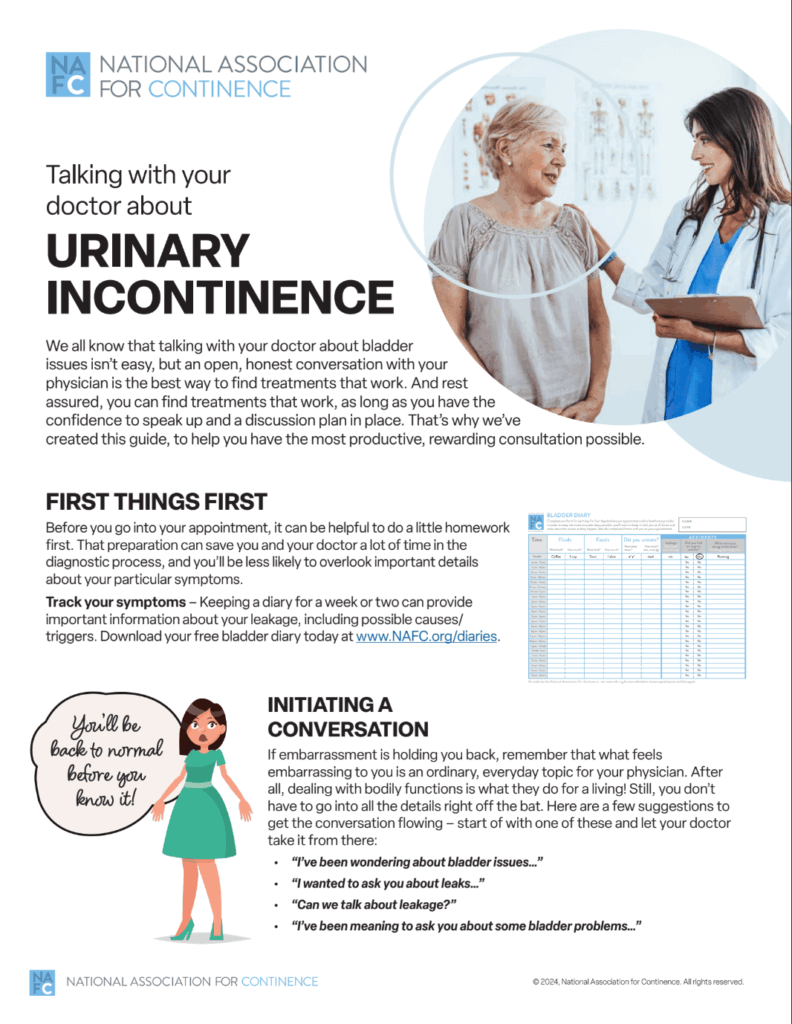
- Diagnostic & Treatment Tools (New!): Download free tools to help you diagnose your patients with incontinence, and guides to help them better understand their treatment options.
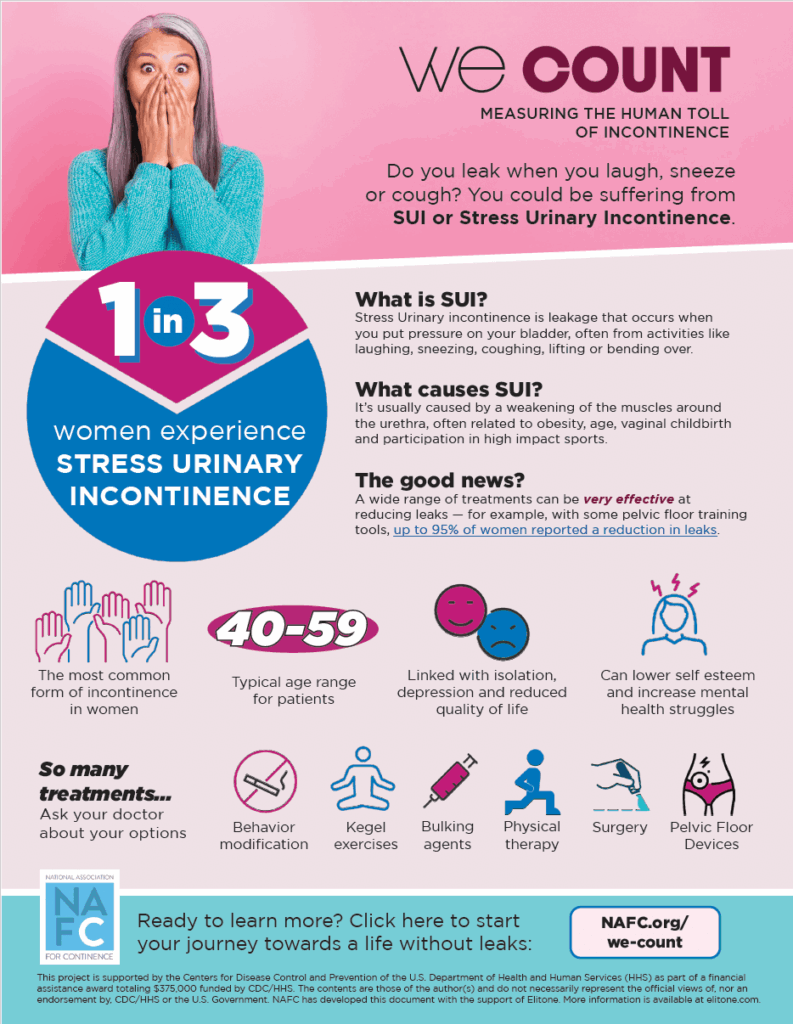
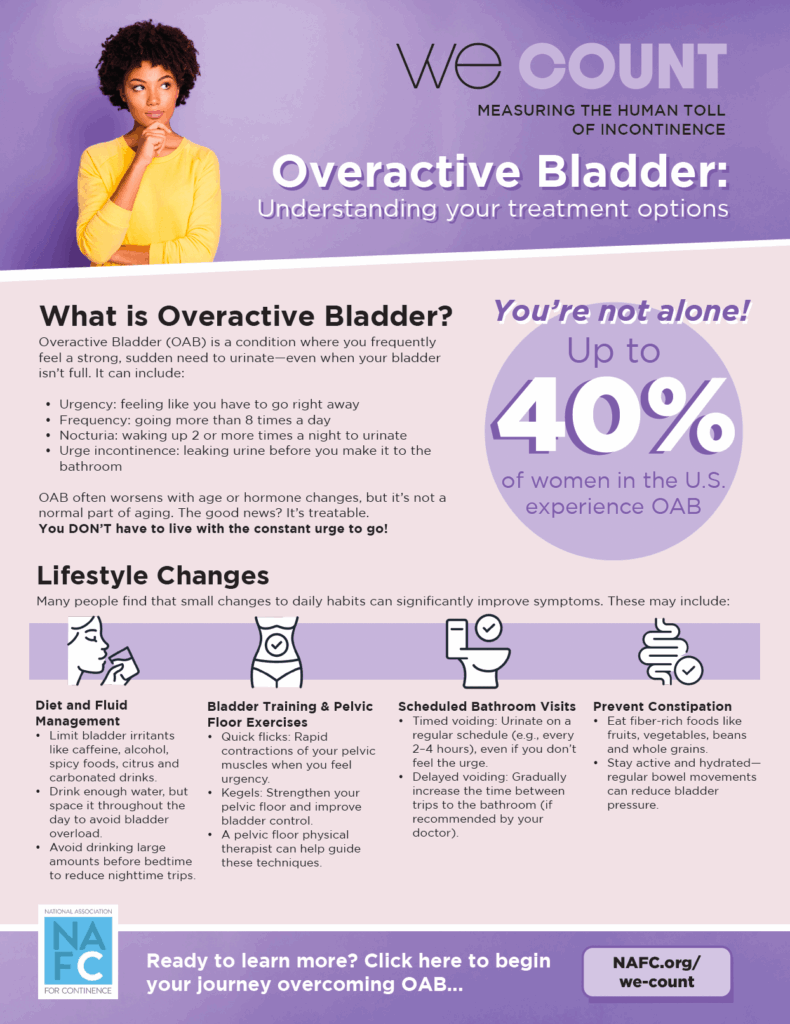
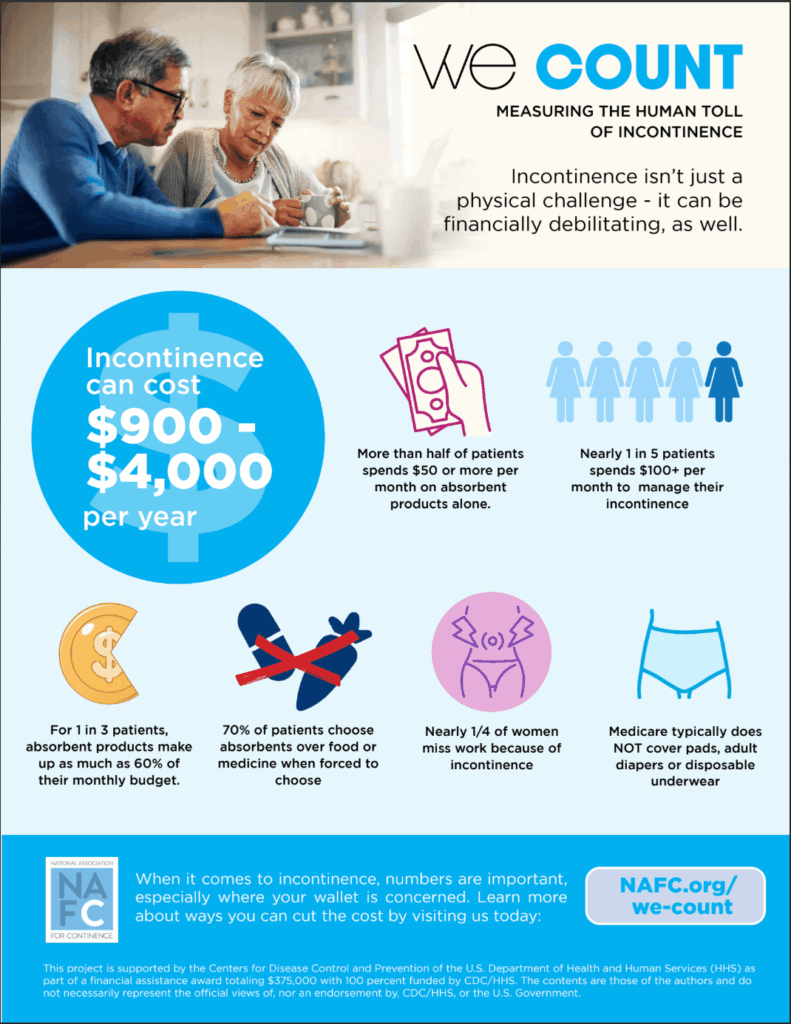
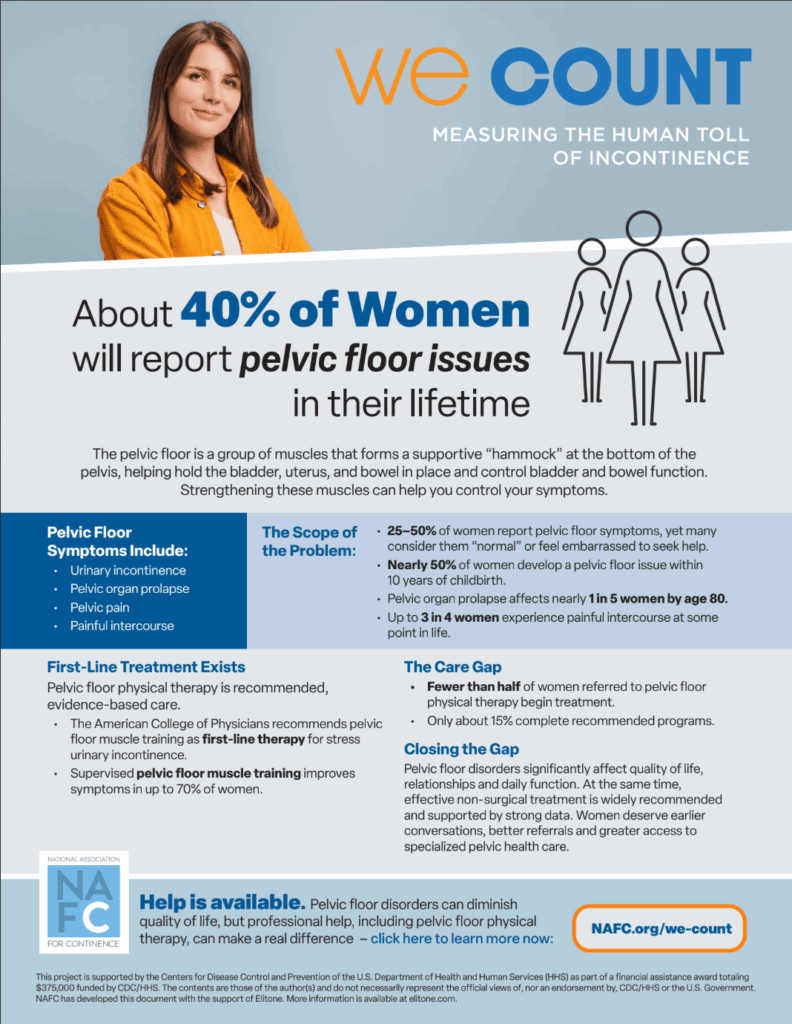
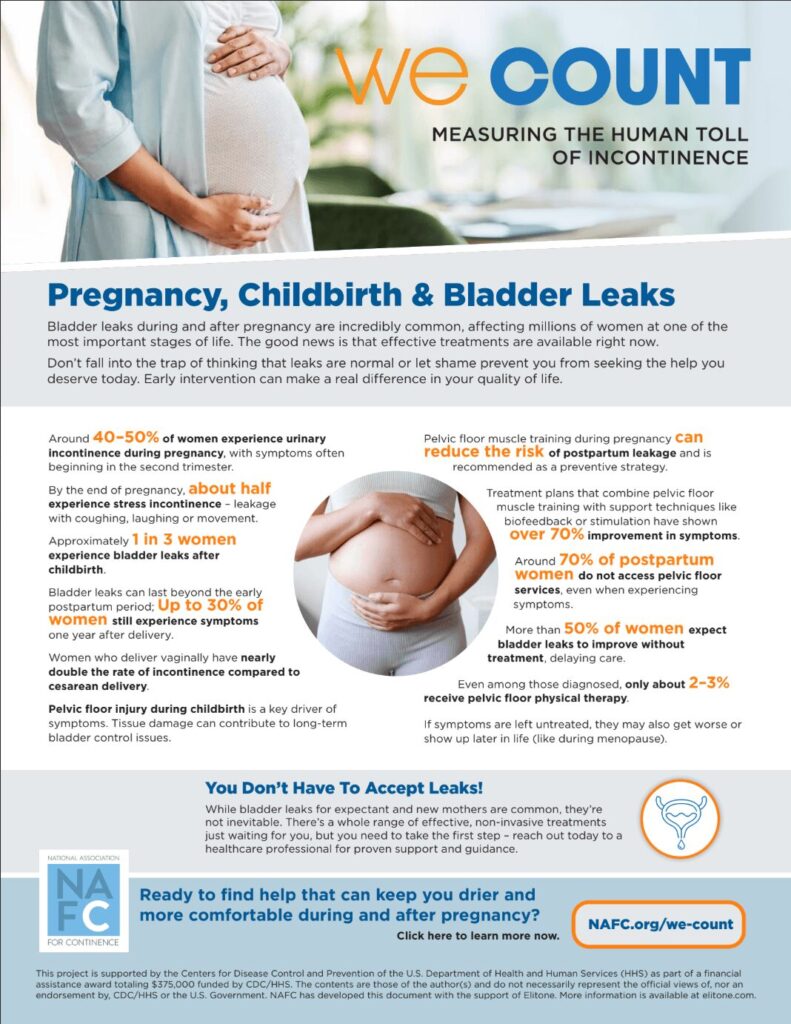
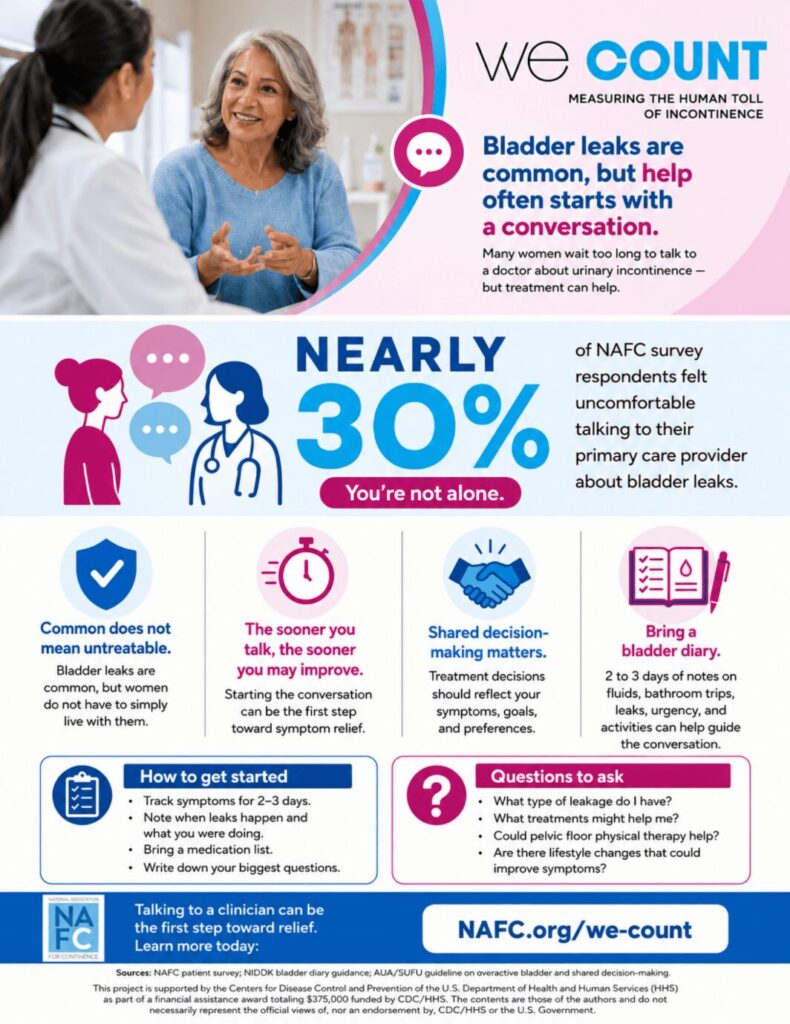
- Patient Brochures and factsheets (see below): Easy-to-understand educational materials.
- Provider Discussion Guide: Strategies for initiating and normalizing the conversation.
- Online Resources: Access to evidence-based information, community support, and real world advice at nafc.org.
Get The Toolkit
Download the free We Count Provider Toolkit to start making these conversations easier and more impactful in your practice. Together, we can help women understand that incontinence is not an inevitable part of aging, and that treatment is possible.
We Count Fact Sheets
Download Your Free Incontinence Indicator Report